Editor's Choice
Bosch 1617EVSPK Variable-Speed Combo

- 8,000–25,000 RPM with Constant Response feedback
- Plunge + fixed bases on 2.25 HP motor
- Gold standard for dial-controlled table and handheld work
Expert Review & Guide
Variable speed separates a wood router that scorches cherry from one that shears cleanly across grain changes. Large bits need lower RPM; small trim cutters can run faster—if the dial, trigger, or electronic feedback actually holds speed under load.
This guide compares ten variable-speed routers in supplied order: compact palm kits, full-size Bosch combo motors, DEWALT trim routers, and a cordless compatible bare tool. We explain where six-speed budget dials teach good habits and where Constant Response or soft-start electronics justify pro pricing.

As an Amazon Associate we earn from qualifying purchases. We may earn a commission at no additional cost to you.
All ten routers include variable speed control—compare RPM range, motor class, and base type in supplied order. No prices; verify live Amazon listings.

TEENO's six-speed compact router kit lands at the budget end of variable-speed woodworking—1.25 horsepower class power with a dial that steps through six RPM settings so beginners learn how bit size and material change safe speed. Fifteen carbide bits and guides in a case sweeten the value for first cabinet.
Honest expectations: this is not Constant Response electronics on a Bosch combo. It teaches variable speed habits on laminate, MDF shelving, and light hardwood edges when you take shallow passes. Upgrade cutters before blaming the motor for burns on maple nosing.
Day to day, variable speed and a stable base matter more than peak RPM on paper. Set depth on scrap from the same species, lock the base, and feed at a rate that keeps chips flowing without forcing the motor. Dust at the bit improves visibility and reduces finish defects from grit trapped under the plate.
Honest limits keep buyers happy: compact trim routers are not table joinery machines. Deep passes in hard maple, large raised-panel bits, and production dados belong on corded combo kits. Treat this tool as your edge, template, and punch-list specialist and it will earn its drawer space for years.
Ergonomics show up on the third hour of a kitchen run—balance with the battery attached, switch placement, and whether the cord exit (or battery pod) clears your wrist angle on vertical cuts. Guides and dust ports are not optional luxuries when you route inside face frames or along installed countertops.
Choose this listing when its platform, accessories, and honesty about bare-tool status match your shop. Verify collet runout, test compatibility on scrap, and upgrade cutters before blaming the motor for burns. The right router is the one that fits your batteries, your projects, and your tolerance for official vs compatible trade-offs.
Dial speed to bit diameter before powering on. Test depth on scrap from the same species and lock the base before production passes.
Match the motor class to your project mix—edges and laminate favor compact tools; table and dados favor full-size combo kits.
We may earn a commission at no additional cost to you.
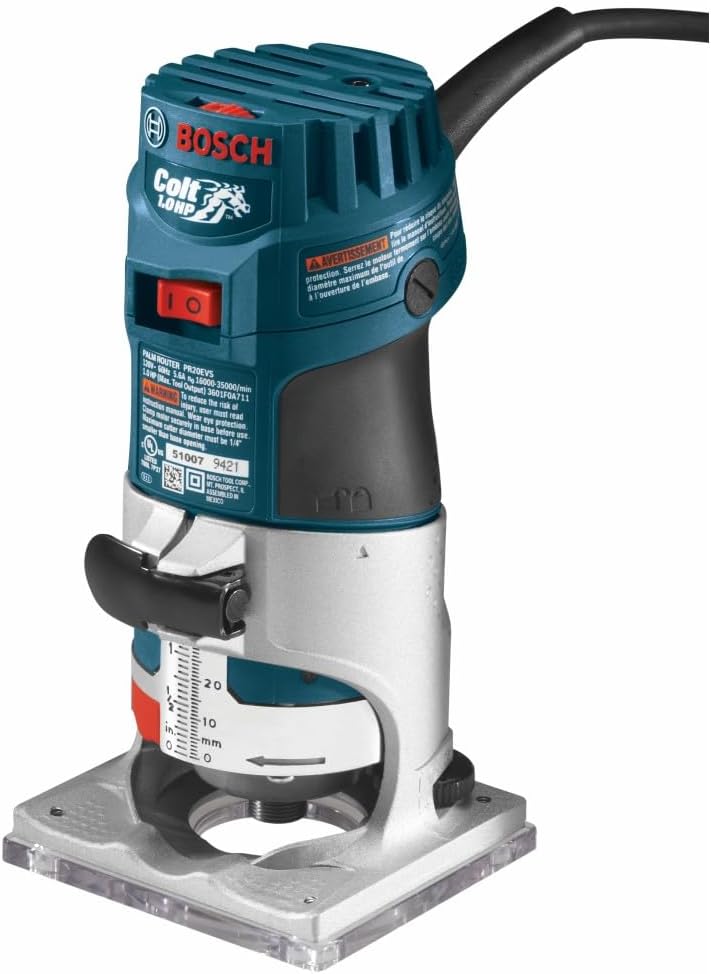
Bosch PR20EVS Colt remains the reference variable-speed palm router—16,000 to 35,000 RPM on the dial, soft start, and Constant Response feedback that keeps laminate and hardwood edges cleaner than fixed-speed trimmers when grain density changes mid-pass. Verify live listing details and compatibility before your first production cut.
Variable speed on a palm router is not optional for serious edge work: small round-overs want higher RPM; flush-trim bits in oak want the low midrange with sharp carbide. Colt's range and electronics make those adjustments intuitive, which is why it tops our variable-speed roundup ahead of budget six-speed switches.
Day to day, variable speed and a stable base matter more than peak RPM on paper. Set depth on scrap from the same species, lock the base, and feed at a rate that keeps chips flowing without forcing the motor. Dust at the bit improves visibility and reduces finish defects from grit trapped under the plate.
Honest limits keep buyers happy: compact trim routers are not table joinery machines. Deep passes in hard maple, large raised-panel bits, and production dados belong on corded combo kits. Treat this tool as your edge, template, and punch-list specialist and it will earn its drawer space for years.
Ergonomics show up on the third hour of a kitchen run—balance with the battery attached, switch placement, and whether the cord exit (or battery pod) clears your wrist angle on vertical cuts. Guides and dust ports are not optional luxuries when you route inside face frames or along installed countertops.
Choose this listing when its platform, accessories, and honesty about bare-tool status match your shop. Verify collet runout, test compatibility on scrap, and upgrade cutters before blaming the motor for burns. The right router is the one that fits your batteries, your projects, and your tolerance for official vs compatible trade-offs.
Dial speed to bit diameter before powering on. Test depth on scrap from the same species and lock the base before production passes.
Match the motor class to your project mix—edges and laminate favor compact tools; table and dados favor full-size combo kits.
We may earn a commission at no additional cost to you.

AVID POWER's red compact router kit puts six variable speeds between 10,000 and 32,000 RPM on a 1.25 HP class motor with edge guide, roller guide, and dust hood—more accessory value than many budget listings at a 4.4 rating for woodworking trim and shelving projects.
Variable speed dial behavior is stepped rather than infinite like Colt, but six positions still map cleanly to common bit sizes. Use lower steps for flush-trim in hardwood, higher for small round-overs in MDF, and let the dust hood keep cut lines visible on dark laminate.
Day to day, variable speed and a stable base matter more than peak RPM on paper. Set depth on scrap from the same species, lock the base, and feed at a rate that keeps chips flowing without forcing the motor. Dust at the bit improves visibility and reduces finish defects from grit trapped under the plate.
Honest limits keep buyers happy: compact trim routers are not table joinery machines. Deep passes in hard maple, large raised-panel bits, and production dados belong on corded combo kits. Treat this tool as your edge, template, and punch-list specialist and it will earn its drawer space for years.
Ergonomics show up on the third hour of a kitchen run—balance with the battery attached, switch placement, and whether the cord exit (or battery pod) clears your wrist angle on vertical cuts. Guides and dust ports are not optional luxuries when you route inside face frames or along installed countertops.
Choose this listing when its platform, accessories, and honesty about bare-tool status match your shop. Verify collet runout, test compatibility on scrap, and upgrade cutters before blaming the motor for burns. The right router is the one that fits your batteries, your projects, and your tolerance for official vs compatible trade-offs.
Dial speed to bit diameter before powering on. Test depth on scrap from the same species and lock the base before production passes.
Match the motor class to your project mix—edges and laminate favor compact tools; table and dados favor full-size combo kits.
We may earn a commission at no additional cost to you.

TwoWin's 6.5 Amp compact router occupies the same variable-speed budget niche as TEENO—handheld palm trim with a dial that lets you drop RPM for larger profile bits and raise it for small round-overs on craft and cabinet touch-up work without paying Colt prices.
Treat it as a learning variable-speed tool: test speed on scrap, clamp work firmly, and expect to upgrade bits and possibly the motor if woodworking becomes weekly. Variable speed still matters here because fixed-max RPM burns melamine quickly on dull cutters.
Day to day, variable speed and a stable base matter more than peak RPM on paper. Set depth on scrap from the same species, lock the base, and feed at a rate that keeps chips flowing without forcing the motor. Dust at the bit improves visibility and reduces finish defects from grit trapped under the plate.
Honest limits keep buyers happy: compact trim routers are not table joinery machines. Deep passes in hard maple, large raised-panel bits, and production dados belong on corded combo kits. Treat this tool as your edge, template, and punch-list specialist and it will earn its drawer space for years.
Ergonomics show up on the third hour of a kitchen run—balance with the battery attached, switch placement, and whether the cord exit (or battery pod) clears your wrist angle on vertical cuts. Guides and dust ports are not optional luxuries when you route inside face frames or along installed countertops.
Choose this listing when its platform, accessories, and honesty about bare-tool status match your shop. Verify collet runout, test compatibility on scrap, and upgrade cutters before blaming the motor for burns. The right router is the one that fits your batteries, your projects, and your tolerance for official vs compatible trade-offs.
Dial speed to bit diameter before powering on. Test depth on scrap from the same species and lock the base before production passes.
Match the motor class to your project mix—edges and laminate favor compact tools; table and dados favor full-size combo kits.
We may earn a commission at no additional cost to you.
When variable speed must cover router-table panel bits and handheld plunge cuts, Bosch 1617EVSPK's 8,000–25,000 RPM range and Constant Response electronics set the standard. Large diameters start safely at the low end; edge round-overs climb the dial without swapping motors.
This is the variable-speed router you buy when RPM control must scale from 1/4-inch trim in softwood to 1/2-inch shank cutters in hardwood on the same afternoon. Combo bases multiply value—plunge for stopped work, fixed for edges and table duty.
Day to day, variable speed and a stable base matter more than peak RPM on paper. Set depth on scrap from the same species, lock the base, and feed at a rate that keeps chips flowing without forcing the motor. Dust at the bit improves visibility and reduces finish defects from grit trapped under the plate.
Honest limits keep buyers happy: compact trim routers are not table joinery machines. Deep passes in hard maple, large raised-panel bits, and production dados belong on corded combo kits. Treat this tool as your edge, template, and punch-list specialist and it will earn its drawer space for years.
Ergonomics show up on the third hour of a kitchen run—balance with the battery attached, switch placement, and whether the cord exit (or battery pod) clears your wrist angle on vertical cuts. Guides and dust ports are not optional luxuries when you route inside face frames or along installed countertops.
Choose this listing when its platform, accessories, and honesty about bare-tool status match your shop. Verify collet runout, test compatibility on scrap, and upgrade cutters before blaming the motor for burns. The right router is the one that fits your batteries, your projects, and your tolerance for official vs compatible trade-offs.
Dial speed to bit diameter before powering on. Test depth on scrap from the same species and lock the base before production passes.
Match the motor class to your project mix—edges and laminate favor compact tools; table and dados favor full-size combo kits.
We may earn a commission at no additional cost to you.

GALAX PRO's compact variable-speed router targets buyers who need a dial-controlled trim motor for occasional shelving, craft edges, and MDF projects without investing in Bosch or DEWALT platforms. Six speed steps still encourage correct RPM thinking on flush-trim and round-over bits.
At 4.2 stars, longevity and collet precision may trail pro tools—acceptable for hobby volume if you sharpen or replace bits often and keep passes shallow in hardwood. Variable speed helps, but it cannot fix aggressive depth on a tired cutter.
Day to day, variable speed and a stable base matter more than peak RPM on paper. Set depth on scrap from the same species, lock the base, and feed at a rate that keeps chips flowing without forcing the motor. Dust at the bit improves visibility and reduces finish defects from grit trapped under the plate.
Honest limits keep buyers happy: compact trim routers are not table joinery machines. Deep passes in hard maple, large raised-panel bits, and production dados belong on corded combo kits. Treat this tool as your edge, template, and punch-list specialist and it will earn its drawer space for years.
Ergonomics show up on the third hour of a kitchen run—balance with the battery attached, switch placement, and whether the cord exit (or battery pod) clears your wrist angle on vertical cuts. Guides and dust ports are not optional luxuries when you route inside face frames or along installed countertops.
Choose this listing when its platform, accessories, and honesty about bare-tool status match your shop. Verify collet runout, test compatibility on scrap, and upgrade cutters before blaming the motor for burns. The right router is the one that fits your batteries, your projects, and your tolerance for official vs compatible trade-offs.
Dial speed to bit diameter before powering on. Test depth on scrap from the same species and lock the base before production passes.
Match the motor class to your project mix—edges and laminate favor compact tools; table and dados favor full-size combo kits.
We may earn a commission at no additional cost to you.

This TEENO wood router listing mirrors the six-speed compact formula—variable RPM control on a 1.25 HP class motor aimed at DIY casework, laminate touch-ups, and hobby furniture edges. Compare this SKU against the primary TEENO kit row for exact included bits and case differences on the live page.
Variable speed remains the headline feature: use lower steps when profiling hardwood nosing, higher when breaking edges on MDF. Pair honest expectations about vibration with upgraded carbide when projects outgrow weekend frequency. Verify live listing details and compatibility before your first production cut.
Day to day, variable speed and a stable base matter more than peak RPM on paper. Set depth on scrap from the same species, lock the base, and feed at a rate that keeps chips flowing without forcing the motor. Dust at the bit improves visibility and reduces finish defects from grit trapped under the plate.
Honest limits keep buyers happy: compact trim routers are not table joinery machines. Deep passes in hard maple, large raised-panel bits, and production dados belong on corded combo kits. Treat this tool as your edge, template, and punch-list specialist and it will earn its drawer space for years.
Ergonomics show up on the third hour of a kitchen run—balance with the battery attached, switch placement, and whether the cord exit (or battery pod) clears your wrist angle on vertical cuts. Guides and dust ports are not optional luxuries when you route inside face frames or along installed countertops.
Choose this listing when its platform, accessories, and honesty about bare-tool status match your shop. Verify collet runout, test compatibility on scrap, and upgrade cutters before blaming the motor for burns. The right router is the one that fits your batteries, your projects, and your tolerance for official vs compatible trade-offs.
Dial speed to bit diameter before powering on. Test depth on scrap from the same species and lock the base before production passes.
Match the motor class to your project mix—edges and laminate favor compact tools; table and dados favor full-size combo kits.
We may earn a commission at no additional cost to you.
DEWALT DWP611 combines variable-speed dial setup with trigger finesse on a 1-1/4 HP compact body—dual LEDs illuminate bit and edge inside cabinets where shadows hide burn marks. Soft-start feedback keeps RPM purposeful when loading flush-trim cutters against laminate or hardwood nosing.
For many trim carpenters, DWP611 is the variable-speed compact that needs no apology next to Colt—choose by ergonomics and battery/cord preference elsewhere in your kit. Dial once for bit size, then use trigger control for touch-up passes on installed work.
Day to day, variable speed and a stable base matter more than peak RPM on paper. Set depth on scrap from the same species, lock the base, and feed at a rate that keeps chips flowing without forcing the motor. Dust at the bit improves visibility and reduces finish defects from grit trapped under the plate.
Honest limits keep buyers happy: compact trim routers are not table joinery machines. Deep passes in hard maple, large raised-panel bits, and production dados belong on corded combo kits. Treat this tool as your edge, template, and punch-list specialist and it will earn its drawer space for years.
Ergonomics show up on the third hour of a kitchen run—balance with the battery attached, switch placement, and whether the cord exit (or battery pod) clears your wrist angle on vertical cuts. Guides and dust ports are not optional luxuries when you route inside face frames or along installed countertops.
Choose this listing when its platform, accessories, and honesty about bare-tool status match your shop. Verify collet runout, test compatibility on scrap, and upgrade cutters before blaming the motor for burns. The right router is the one that fits your batteries, your projects, and your tolerance for official vs compatible trade-offs.
Dial speed to bit diameter before powering on. Test depth on scrap from the same species and lock the base before production passes.
Match the motor class to your project mix—edges and laminate favor compact tools; table and dados favor full-size combo kits.
We may earn a commission at no additional cost to you.

DeWalt-Compatible Cordless Router
This DeWalt 20V-compatible brushless router adds variable speed in five steps up to 30,000 RPM for cord-free trim when you already charge DCB packs on the jobsite. It is not the official DCW600, but the dial still lets you drop RPM for large flush-trim bits and climb for small round-overs.
Variable speed on cordless compatible bodies demands battery discipline—swap packs before voltage sag mimics a speed mistake mid-cut. Test compatibility and collet runout on scrap; keep official Makita or DEWALT references in mind if daily reliability is non-negotiable. Verify live listing details and compatibility before your first production cut.
Day to day, variable speed and a stable base matter more than peak RPM on paper. Set depth on scrap from the same species, lock the base, and feed at a rate that keeps chips flowing without forcing the motor. Dust at the bit improves visibility and reduces finish defects from grit trapped under the plate.
Honest limits keep buyers happy: compact trim routers are not table joinery machines. Deep passes in hard maple, large raised-panel bits, and production dados belong on corded combo kits. Treat this tool as your edge, template, and punch-list specialist and it will earn its drawer space for years.
Ergonomics show up on the third hour of a kitchen run—balance with the battery attached, switch placement, and whether the cord exit (or battery pod) clears your wrist angle on vertical cuts. Guides and dust ports are not optional luxuries when you route inside face frames or along installed countertops.
Choose this listing when its platform, accessories, and honesty about bare-tool status match your shop. Verify collet runout, test compatibility on scrap, and upgrade cutters before blaming the motor for burns. The right router is the one that fits your batteries, your projects, and your tolerance for official vs compatible trade-offs.
Dial speed to bit diameter before powering on. Test depth on scrap from the same species and lock the base before production passes.
Match the motor class to your project mix—edges and laminate favor compact tools; table and dados favor full-size combo kits.
We may earn a commission at no additional cost to you.

Compatible Plunge Router Combo
A compatible cordless plunge-and-fixed combo with variable-speed brushless motor fills a niche for DeWalt battery owners who want stopped cuts and edge work without a cord—five or six speed steps depending on listing variant, with bases that swap roles like true combo kits on a smaller power class.
Variable speed here protects large bits in plunge mode and small trim cutters on edges, but battery platform honesty applies: test on scrap, confirm base locks, and compare against corded Bosch combo horsepower if you live on router-table joinery. Verify live listing details and compatibility before your first production cut.
Day to day, variable speed and a stable base matter more than peak RPM on paper. Set depth on scrap from the same species, lock the base, and feed at a rate that keeps chips flowing without forcing the motor. Dust at the bit improves visibility and reduces finish defects from grit trapped under the plate.
Honest limits keep buyers happy: compact trim routers are not table joinery machines. Deep passes in hard maple, large raised-panel bits, and production dados belong on corded combo kits. Treat this tool as your edge, template, and punch-list specialist and it will earn its drawer space for years.
Ergonomics show up on the third hour of a kitchen run—balance with the battery attached, switch placement, and whether the cord exit (or battery pod) clears your wrist angle on vertical cuts. Guides and dust ports are not optional luxuries when you route inside face frames or along installed countertops.
Choose this listing when its platform, accessories, and honesty about bare-tool status match your shop. Verify collet runout, test compatibility on scrap, and upgrade cutters before blaming the motor for burns. The right router is the one that fits your batteries, your projects, and your tolerance for official vs compatible trade-offs.
Dial speed to bit diameter before powering on. Test depth on scrap from the same species and lock the base before production passes.
Match the motor class to your project mix—edges and laminate favor compact tools; table and dados favor full-size combo kits.
We may earn a commission at no additional cost to you.

Variable speed is not a luxury on modern routers—it is how you keep large bits safe and small bits clean. Match dial type, RPM range, and motor class to your projects.
Full-size routers use top-mounted dials; trim routers may combine dial and trigger for mid-cut adjustments. Constant Response and similar systems hold RPM when load increases.
Budget six-speed switches teach discrete steps; pro dials feel infinite within the range.
Large panel-raising and dish bits want the low end of the dial. Small round-overs and flush-trim bits can run mid to high RPM in softwood and laminate.
If the range starts at 10,000 RPM, you still have headroom for trim work; combo kits bottom near 8,000 for safer large-bit table work.
Soft start reduces twist when motors spin up—valuable on palm routers and full-size combos alike.
Pair soft start with firm two-hand grip and correct feed direction.
Compact 1–1.25 HP routers variable-speed well for edges and laminate. Full-size 2+ HP routers variable-speed better for table bits and hardwood depth.
Buy compact when edges dominate; buy combo when dados and tables dominate.
Cordless compatible routers offer five or six speed steps but depend on battery voltage under load.
Official cordless trim routers from major brands hold speed more predictably than some third-party compatible bodies.
TEENO, TwoWin, GALAX PRO, and AVID POWER teach variable speed cheaply with bits included.
Bosch and DEWALT earn ratings with smoother electronics and longer service life under heavy use.
Consult the bit manufacturer chart when available—large diameter equals lower RPM as a starting point. Set the dial before powering on and lock the base.
On trigger-controlled trim routers, set the dial to max allowable speed for the bit, then use trigger finesse for partial cuts or touch-up passes.
Listen and watch chips: darkening or burning means slow down or sharpen the bit; whistling chatter may mean too slow or too deep for the material.
Take shallow passes at lower speeds in hardwood; raise speed slightly for final skim passes in softwood or MDF when the bit is sharp.
On router tables, variable speed is safety equipment for big bits—never run a panel raiser at trim-router RPM.
Recheck speed when swapping bits—even experienced woodworkers forget to retune after changing from a 1/4-inch round-over to a 1/2-inch straight cutter.
Bit tip speed must stay in a safe range for diameter and material. Variable speed lets you lower RPM for large bits and hardwoods and raise it for small cutters—reducing burn, chatter, and breakage.
Bosch 1617EVSPK for full-size combo work with Constant Response; Bosch PR20EVS Colt for palm routing; DEWALT DWP611 for compact trim with excellent feedback.
Yes for learning and light DIY. Discrete steps still teach the relationship between bit size and RPM. Pros often prefer infinite dials plus feedback electronics for smoother hold under load.
Yes—it electronically compensates when cutting load increases, keeping speed steadier through dense grain or deeper passes. You still need sharp bits and reasonable depth.
No. Max RPM is for small-diameter bits in appropriate materials. Large bits at max RPM risk burning, kick, and unsafe tip speeds.
Official and compatible cordless trim routers offer dial steps, but battery sag can affect hold under load. Keep packs charged and use high-capacity cells for long runs.
Both excel. Colt runs higher top RPM for small bits; DWP611 offers dual LEDs and trigger finesse. Choose by ergonomics and existing brand loyalty.
Strongly yes when running larger bits. Table work often uses bigger cutters than handheld trim—variable speed is a primary safety and finish-quality control.
Variable speed belongs on every serious wood router shortlist. Bosch 1617EVSPK leads for combo and table duty; PR20EVS Colt and DEWALT DWP611 cover palm and compact trim with excellent dial behavior.
Budget six-speed kits from TEENO, TwoWin, GALAX PRO, and AVID POWER teach the habit affordably—upgrade electronics when woodworking becomes weekly production.
Match RPM to bit and material every time you mount a cutter. Use our comparison table, confirm specs on Amazon, and publish with woodrouter07-20 replaced on every link.