Editor's Choice
ALL-IN-ONE Door Hinge/Lock/Latch Kit
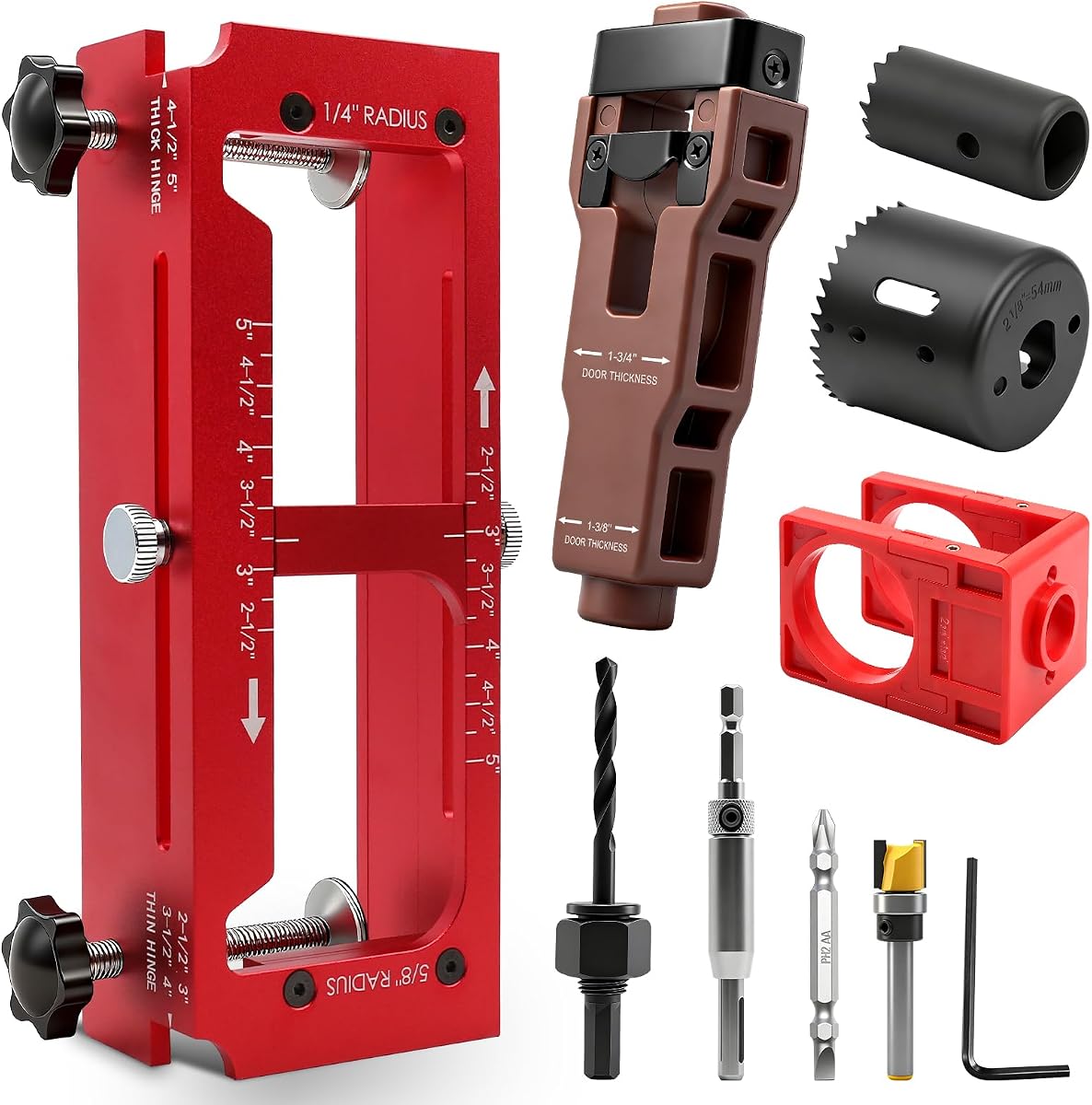
- Hinge, lock, and latch templates in one aluminum-focused kit
- Covers 2.5"–5" hinges plus common US door thicknesses
- Top pick for complete interior door hardware prep
Expert Review & Guide
Looking for the best mortising jig for router work on doors, fastener slots, or furniture joinery in 2026? This buying guide separates aluminum door hinge kits, trimmer slotting brackets, and true mortise-and-tenon frames so you stop buying the wrong “mortise” tool for the job in your shop or on the jobsite.
We review ten options in research order—from 2-in-1 slotting brackets and all-in-one hinge/lock kits to Milescraft edge guides and a classic General Tools joinery jig. Use the Top 3, comparison table, and full reviews to match template style, door thickness, and joint type before you cut a painted slab or a table apron.


As an Amazon Associate we earn from qualifying purchases. We may earn a commission at no additional cost to you.
Compare jig class, capacity, and kit extras before the long reviews. No prices are listed—Amazon bundles shift. Confirm whether a product is a door hinge template, a trimmer slotting bracket, or a furniture mortise-and-tenon jig.

2-in-1 Slotting & Positioning Jig
Searching for the best mortising jig for router slotting and invisible fasteners? This 2-in-1 aluminum bracket turns a compatible trimmer into a guided slotting tool, gripping stock from zero to two inches so grooves stay straight instead of wandering with a freehand base.
Cabinet installers who sink fasteners in edges will notice the micro-adjust clamp first. It locks the work so vibration cannot creep the cut line while the heavy aluminum base keeps the router centered in the 65mm collar opening. Test on scrap from the same material before any show face.
Use it for decorative edge grooves and fastener slots in hardwood, plywood, and composites. It is not a door-hinge leaf template, and the middling rating means you should verify fit on your trimmer before a show cabinet. Keep feeds light and support long panels fully.
Buy this slotting jig when fastener grooves and edge dados define your week. Skip it if you need a classic hinge mortiser or a full mortise-and-tenon frame. Confirm collar diameter, clamp the work, and treat the first pass as a scrap rehearsal.
For remodel punch lists, the compact form factor matters as much as aluminum stiffness. Toss it in a tote with a trim router and a straight bit, and you can cut fastener slots on site without building a disposable plywood jig every time the layout changes.
Slotting brackets shine for fasteners and grooves; hinge kits shine for door leaves. Pick the class that matches this week’s doors or cabinets—not the thumbnail that merely says mortise.
We may earn a commission at no additional cost to you.
ALL-IN-ONE Door Hinge/Lock/Latch Kit
If you want the best mortising jig for router-based door hanging in one carton, the ALL-IN-ONE hinge, lock, and latch kit is our Editor's Choice. Aluminum templates guide hinge recesses from 2.5 to 5 inches while the lock and latch pieces finish the boring sequence.
Door installers burn hours chasing separate jigs; this kit collapses that hunt. Silicone pads protect paint, the hinge range covers round and square corners, and the included hole saws aim at common 2-1/8 inch face bores on 1-3/8 and 1-3/4 inch doors.
Expect a learning afternoon: dry-fit the hinge leaf, set depth, rout the mortise, then move to lock and latch templates. Square corners still want a sharp chisel. The 4.6 rating matches what careful DIYers report when they respect door thickness and backset marks.
Choose this kit when a whole-door hardware day is the job. Pass if you only need a leaf hinge jig without boring extras. Keep the router base flat, vacuum chips from the template, and never force a hole saw that is wandering off the pilot.
Landlords and remodel crews will appreciate having hinge, knob, and latch geometry in one case. Label the hole saws after the first job so the next apartment turnover does not become a treasure hunt in a dusty tote.
Rout hinges first on a stable pair of sawhorses, then bore locks with the door braced. Changing jobs mid-door without rechecking thickness is how latches end up proud.
We may earn a commission at no additional cost to you.

Aluminum Door Hinge Jig + Lock Kit
Door-leaf specialists hunting the best mortising jig for router hinge work should shortlist this 6061 aluminum kit with lock and latch extras. It states clearly that it is for the door leaf, not the jamb—an honest limit that prevents a bad Amazon surprise.
Built-in depth stop and non-slip pads help repeat mortises on painted interiors. Round-corner hinges at 1/4 or 5/8 inch radius cut cleanly; square leaves need a quick chisel kiss. The lock template covers common US thicknesses and backsets. Test on scrap from the same material before any show face.
Compared with hinge-only jigs, the latch mortising tool is the quiet hero for flush faceplates. Take light router passes, keep silicone pads clean, and support hollow-core doors so the template cannot rock. Practice on a scrap door skin if you are new.
Buy it when your workflow is door leaves on sawhorses. Skip it if you must mortise jambs in place with the same template. Pair with a sharp hinge bit and a self-centering drill for screw holes after the recess is cut.
Production hangers should stage doors the same face up every time so switch hand and depth habits stay consistent. A small shop vac hose near the template keeps chips from lifting the base mid-cut.
Many aluminum kits refuse jamb duty. If you must mortise jambs, buy a jig that says so—or cut carefully with traditional methods.
We may earn a commission at no additional cost to you.

Adjustable Mortise Template Rails
Need the best mortising jig for router openings larger than a hinge leaf? This adjustable rail template stretches toward a 19 by 19 inch working area so square and rectangular recesses, panel inlays, and even juice-groove setups become clamp-and-rout operations.
Four long rails let you dial openings without building a one-off MDF box every project. High-density wood slides under a router base or drill guide, but you must clamp the frame hard—F-styles or C-clamps are mandatory, and some strips are DIY add-ons.
Furniture makers use it for floating-panel reveals and decorative recesses more than door hardware. It will not replace an aluminum hinge kit for hanging interiors. Keep the router bushing centered and take shallow passes on brittle veneers.
Choose the rail jig when custom rectangular mortises define your shop. Pass if you only hang doors. Sketch the opening, clamp twice, and verify square with a reliable framing square before the bit spins.
Because the frame is wood, store it flat and dry. A warped rail becomes a tapered mortise you will feel every time a lid or panel drops into the pocket.
A loose rail frame is a tapered mortise waiting to happen. Clamp every corner, then tug-test before the bit touches wood.
We may earn a commission at no additional cost to you.

Milescraft 1224 Edge & Mortise Guide
Shop woodworkers who want the best mortising jig for router edge slots without a door-hardware kit often land on the Milescraft 1224. It combines a straight-edge guide with mortising pins and a clear offset base for steadier handheld control. Test on scrap from the same material before any show face.
Compatibility with plunge and fixed bases matters in mixed shops. Pins help center mortises across board thicknesses, while the roughly 5-1/2 inch travel covers many edge-guided grooves. Radial surface area also helps when you follow curved edges carefully. Test on scrap from the same material before any show face.
This is a generalist guide, not an all-in-one door hanger. Use it for furniture mortise slots, edge dados, and guided grooves where a full aluminum hinge template would be the wrong tool. Keep pins clean and the offset base unscratched for visibility.
Buy Milescraft when versatility beats door-specific kits. Skip it if your only job is hinge recesses on blank doors. Pair with a sharp straight or spiral bit and clamp edge guides whenever the workpiece can shift.
The brand’s Turn-N-Lock ecosystem means you may already own related bases. That familiarity shortens setup when you bounce between circle guides and mortise work in the same afternoon.
Set Milescraft pins to the stock thickness and take a skim pass to confirm centering before full depth.
We may earn a commission at no additional cost to you.
Door Hinge Jig & Lock Drilling Kit
Looking at ratings alone, this door hinge and lock drilling kit claims a perfect score among these listings—so it earns Best Rated Door Kit in our best mortising jig for router roundup. Aluminum construction and silicone pads target clean interior installs.
The adjustable template covers 2.5 to 5 inch hinges with round or square corners, while the lock kit handles common backsets on 1-3/8 and 1-3/4 inch doors. Included bits and hole saws aim to get first-time hangers cutting the same day.
Treat five-star new listings with a scrap-door rehearsal. Confirm hinge corner radius, set depth to the leaf thickness, and keep the base flat. Square corners still need chisels. Vacuum chips so pads do not skate on debris.
Choose it when you want a complete door-prep carton with strong early feedback. Pass if you already own hole saws and only need a bare hinge template. Store saws labeled by diameter after the first apartment turnover.
For rental flips, consistency beats speed. Mark hinge locations from a story stick so every bedroom door in the unit shares the same reveal story before the router starts.
High ratings are encouraging; scrap rehearsal is mandatory. Geometry errors show up after paint when returns hurt.
We may earn a commission at no additional cost to you.

Fockety 2-in-1 Slotting Bracket
Budget site work still needs the best mortising jig for router fastener slots sometimes—and the Fockety 2-in-1 bracket targets 65mm trimmer bases for chamfers, grooves, and invisible-fastener style slots in a compact aluminum package. Test on scrap from the same material before any show face.
Thickness capacity up to about five centimeters covers many cabinet panels. It is lighter than full door kits, which helps on ladders and punch lists, but the 3.7 rating warns you to inspect threads and fit on arrival. Test on scrap from the same material before any show face.
Do not confuse this with a hinge mortiser. It is a trimmer accessory for guided edge and slot work. Keep the collar snug, take shallow passes in hardwood, and support thin stock so the bracket cannot tip.
Buy Fockety as a compact slotting helper for a matching trimmer. Skip it for door leaves or mortise-and-tenon frames. If your router base is not 65mm class, walk away before the return window closes.
Value brackets live or die on collet-like fit. If you feel play at the collar, stop and shim or return—play becomes wavy slots faster than dull bits do.
Measure your trimmer collar before ordering any 65mm bracket. Close enough is not enough at 20,000 RPM.
We may earn a commission at no additional cost to you.

Red Aluminum Door Hinge Mortise Jig
Want a focused best mortising jig for router hinge leaves without a suitcase of lock parts? The red 6061 aluminum hinge jig keeps the mission simple: clean recesses from 2.5 to 5 inches on doors up to 1-3/4 inches thick.
Depth gauges for thick and thin hinges reduce guesswork, while self-centering bits and silicone pads speed screw layout and protect finishes. Square-corner hinges still need chisel work at the corners after routing. Test on scrap from the same material before any show face.
Because lock kits are absent here, pair it with a separate boring jig if you are hanging complete doors. The straightforward structure suits first-time DIYers who only need hinge mortises this weekend.
Choose the red jig for hinge-only clarity. Pass if you need lock and latch templates in the same box. Always work on the door leaf as designed—not the jamb—unless you add a purpose-built jamb solution.
Paint-grade doors forgive tiny flaws; stain-grade doors do not. Take a final skim pass at full depth only after a test cut confirms the leaf sits flush without proud edges.
Own a separate lock jig or use traditional boring jigs if this red template is your only purchase.
We may earn a commission at no additional cost to you.

Remodelers comparing the best mortising jig for router door kits should put the KATA hinge and lock package on the shortlist. Anodized 6061 aluminum, non-slip pads, and common US door sizing cover most interior hanging days. Test on scrap from the same material before any show face.
Hinge mortises span 2.5 to 5 inches for round-corner leaves, with square corners finished by chisel. The lock jig adjusts for 1-3/8 and 1-3/4 inch doors and standard backsets so knob and deadbolt bores line up. Test on scrap from the same material before any show face.
Clear markings help first-timers avoid the classic backset mix-up. Keep pads clean, clamp or brace hollow doors, and bore with sharp hole saws at controlled speed. The kit is for door leaves—not jamb hardware recesses.
Buy KATA when you want a balanced aluminum combo without chasing five separate tools. Skip it for jamb-only work or true mortise-and-tenon furniture joints. Stage bits in labeled bags after each job.
Maintenance crews should keep a dedicated scrap door section for training new hires. Ten practice mortises cost less than one mis-bored solid-core slab on a finish schedule.
Write 2-3/8 or 2-3/4 on blue tape on the door edge before the hole saw spins. Mix-ups are expensive.
We may earn a commission at no additional cost to you.
General Tools Mortise & Tenon Jig
Furniture builders chasing the best mortising jig for router joinery—not door hardware—should consider the General Tools mortise and tenon jig. Clamps and swing arms align stock so a plunge router can cut matching mortises and tenons with bushing guides. Test on scrap from the same material before any show face.
Included 1/4 inch up-cut spiral bit and bushings for 1/4, 3/8, and 1/2 inch tenons give a complete starter path. Mount the jig to a bench or a board in a vise so the setup cannot walk while you plunge.
This is classic frame joinery tooling. It will not hang a prehung door. Expect setup time and a learning curve reflected in the modest rating—patience and scrap practice pay off in tight shoulders.
Choose General Tools when tables, doors for cabinets, and rails need real mortise-and-tenon strength. Pass if you only need hinge recesses. Keep bushings clean and verify bit diameter before every batch of legs.
Mark face sides consistently so tenon cheeks and mortise walls reference the same faces. Joinery jigs amplify layout discipline; they do not invent it.
Cut five practice joints in scrap of the project species before touching apron stock.
We may earn a commission at no additional cost to you.

The best mortising jig for router projects matches the joint you cut this month—door hinges, fastener slots, or furniture tenons—not the longest marketing bullet on the box.
Most shoppers typing best mortising jig for router actually need one of three tools: an aluminum door hinge template, a trimmer slotting bracket for fasteners, or a true mortise-and-tenon jig for furniture. Mixing those classes is how returns happen.
If you hang interior doors, prioritize hinge length range, corner radius, and whether jambs are supported. If you sink invisible fasteners, prioritize collar diameter. If you build tables, prioritize bushing sizes and clamp security.
Aluminum resists the flex that ruins plastic hinge jigs after a season of jobsite abuse. Silicone or rubber pads keep painted doors prettier and reduce skating when chips pile up.
Still, aluminum cannot fix a dull bit or a rocking hollow-core door. Brace the slab, vacuum the template, and keep pads clean.
Match 1/4 inch or 5/8 inch round corners to the hinges in the box. Square leaves need chisel work after routing. Depth should match leaf thickness so hinges sit flush—not proud, not sunken.
A built-in depth stop earns its keep on multi-door days. Set it once on scrap, then repeat.
All-in-one kits save time when they include face-bore hole saws, edge-bore guides, and latch mortise helpers for common backsets. Confirm 2-3/8 versus 2-3/4 inch backset before you cut.
If the kit is hinge-only, budget a separate lock jig or traditional boring tools.
Collar-fit brackets need the stated diameter—often 65mm for trimmer accessories. Full-size routers usually prefer hinge templates that reference the door edge rather than a collar size.
Sharp straight or spiral bits sized to the template make cleaner walls. Burned mortises usually mean dull cutters or rushed depth.
Door kits will not cut furniture tenons. A dedicated mortise-and-tenon jig with bushings is the right answer for rails, stiles, and table aprons.
Likewise, a tenon jig is a poor hinge mortiser. Buy the tool class that matches the joint.
Read the template’s door-leaf versus jamb limits, then brace the workpiece so it cannot rock. Install a sharp bit, set depth on scrap of the same thickness, and confirm hinge corner radius before you touch a show door.
Clamp or firmly seat the jig with pads clean. Rout in shallow passes, keeping the base flat. For lock kits, mark backset clearly, bore with sharp hole saws, and finish latch plates with light controlled cuts.
Square-corner hinges need chisel work at the corners after routing. Vacuum chips often so templates do not ride up on debris. Unplug the router when changing bits or adjusting depth stops.
For mortise-and-tenon jigs, mount the body securely, align face sides, and cut practice joints before project stock. Keep bushings matched to the bit diameter you installed.
After the job, wipe pads, store hole saws by size, and check screws on aluminum frames. A maintained jig stays accurate longer than a tossed-in-the-truck template.
For most interior doors, an aluminum all-in-one hinge and lock kit—like our Editor's Choice—covers hinge recesses plus boring for knobs. Confirm hinge length, corner radius, and door thickness on the listing before you buy.
Some systems can; many popular aluminum kits are door-leaf only. Read the product copy carefully. Jamb work often needs a different template or traditional methods.
A fixed-base or compact router often works with hinge templates because you set depth and enter from the edge or with careful starts. Plunge bases shine for stopped mortises and joinery jigs. Match the base to the template instructions.
Use a sharp straight or mortising bit sized for the template and hinge thickness. Many kits include a suitable bit—verify diameter and condition before cutting a painted door.
Round-corner templates match round bits; square leaves leave rounded corners that must be squared with a chisel. Plan that extra minute per hinge.
Not really. Slotting brackets guide grooves and fastener slots on compatible trimmers. Door hinge mortisers reference hinge geometry on a slab. Furniture mortise-and-tenon jigs are a third class.
Score perimeter lines lightly, take shallow passes, keep the template tight, and use a sharp bit. Back up hollow cores and vacuum chips so the base cannot rock.
Our Editor's Choice is the ALL-IN-ONE door hinge, lock, and latch kit for complete interior prep. The 5.0-rated hinge and lock kit is the hot-rated alternative, and General Tools wins when you need true mortise-and-tenon furniture joints.
If you hang interior doors, start with the ALL-IN-ONE hinge, lock, and latch kit—our Editor's Choice for the best mortising jig for router door prep in this roundup. The 5.0-rated hinge and lock kit is the enthusiasm pick, while General Tools remains the furniture joinery answer.
Slotting brackets and rail frames have honest roles for fasteners and large recesses, but they are not hinge kits. Match the tool class, confirm fit and door thickness, and practice on scrap before painted slabs.
Use the comparison table to shortlist three options, read the cons, and confirm kit contents on Amazon. Replace woodrouter07-20 with your affiliate tag before publishing, then keep bits sharp and templates clean.